Sunday, September 22, 2013

The New Voices of 2013

Explore the New Voices of 2013

Library Lines
September 5, 2013

This summer, I had the incredible opportunity to attend a month-long education program about the publishing industry in Denver, CO. I learned about the editing process, how to market books, and just how precarious the industry can be, especially for new unknown writers. In most instances, marketing and word-of-mouth among voracious readers decide whether a new author's book will be successful and whether the author's next book will see the light of day.

On the third day of the the program, we sat in the sauna of a classroom; our necks craned left or right to listen to our next presenter. He was Peter Heller, one such writer whose first novel The Dog Stars was published in 2012 to a swell of good reviews and became a national bestseller. We sat in our rows of desks, our jaws slack and our eyes wide, and we hung on his every word as he told us the adventurous tale of how he became a writer and about the editorial process for The Dog Stars. In the case of the charismatic Heller, word-of-mouth and glowing reviews helped sell thousands of copies of his books, but not all books are so lucky.

With the growing number of books published each year, including those that are self-published, we are overwhelmed by the number of options. This often leads us to retreat to our Old Faithfuls, the authors we return to over and over because we already love their stories, characters, or writing styles, and are less inclined to take a chance on an unfamiliar voice.

I have a challenge for you this month: I challenge you to read a book by a new author published within the last year. Experiment with a voice outside your comfort zone or try an unconventional story you wouldn't read normally. Then pass it on to your friends. To help in your search, here is our list of the top six debut novels of 2013:

The Fields by Kevin Maher
A brilliant debut by a remarkable new voice in Irish fiction, Maher immediately hits a comic stride in his novel about a 13-year-old boy who sinks into trouble as he learns how to be a man. A story of first love, first loss, astral healing, multiple worlds theory, cancer, family dynamics, and Bronski Beat, The Fields will have you laughing out loud as you race through the pages to the satisfying end.

The Longings of Wayward Girls by Karen Brown
In an idyllic Connecticut community, secrets are commonplace. For Sadie Watkins, they define her life. What happened that summer so many years ago that changed everything? In this debut psychological suspense novel, Karen Brown expertly weaves past and present to unravel mysteries of mother/daughter relationships, missing girls, adultery, and the nuances of growing up. (Review coming soon)

Tampa by Alissa Nutting
A story ripped from the headlines (Debra Lafave, 2005), Nutting's novel explores the psyche of Celeste Price, a middle school teacher who elicits an affair with a 14-year-old student. Unapologetic and insatiable, Celeste acts as a prism for us to view our societal views of female teacher-male student relations. Nutting skillfully raises questions about our values and leaves the reader wondering how we might answer them.

The Universe Versus Alex Woods by Gavin Extence
At age 10, Alex Woods had the misfortune of being struck by a meteorite. He survives, but is irreparably scarred. Now, at age 17, he finds himself hiding from bullies in the curmudgeonly Mr. Peterson's garden. The Universe Versus Alex Woods draws you in as Alex and Mr. Peterson explore the fundamentals of human rights, the tragedy of everyday living, astronomy and astrology, the works of Kurt Vonnegut, and the intricate networks the connect our world. If you enjoy unique experiences, this is a must read.

The Promise of Stardust by Priscille Sibley
When a tragic fall puts Dr. Matt Beaulieu's wife on life support, Matt reluctantly agrees to let her go, knowing it was her wish that he not prolong her life. That is, until he and her doctors discover she's pregnant. Now he must decide whether to do as his wife wished or keep her alive to save the child they both longed for. Sibley writes with grace, sensitivity, and compassion in this emotionally resonant and thought-provoking tale about life and death, faith and medicine, and illuminates the power of love to divide and heal a family in the wake of an unexpected tragedy. This book will stay with you long after the last page is read.
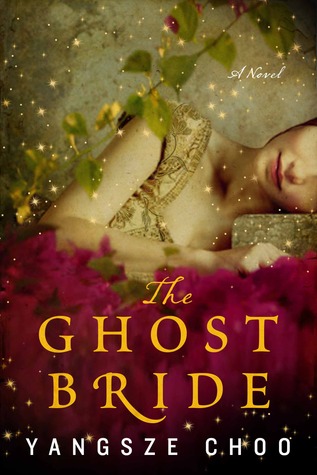
The Ghost Bride by Yangze Choo
Both a love story and a ghost story, The Ghost Bride fuses Chinese folklore, romantic intrigue, and dreamlike twists to tell the story of Li Lan, a young woman wedded into one of China's most esteemed families. The catch is her husband is already dead. Each night, Li is drawn into the dark realm of the Chinese afterlife, navigating both the land of the dead and the territory of her own heart. Fans of Lisa See and Amy Tan will be captivated by this new startling, original voice.

C.S. Lewis once said, "Literature adds to reality, it does not simply describe it. It enriches the necessary competencies that daily life requires and provides; in this respect, it irrigates the deserts that our lives have already become." New authors enrich our literature with new perspectives on human nature and society, new ways to understand our desires, instincts, and reactions to circumstances. Treat yourself to a new flavor, the way you travel to a new exotic location or taste a spicy new dish you always wanted to try, all from the comfort of your favorite recliner. And remember to pass it on.

To round out the Top Ten, check out:


For more on my adventures at the publishing program in Denver, check out followtheminion.blogspot.com

Friday, August 30, 2013

Why We Love Superheroes

Summer is for Superheroes
Library Lines 7/21/13

What is your favorite part of summer? Is it savoring the last minutes of the sun at the end of a great beach day? Is it the smell of the rain as the latest named hurricane swirls its path across the state? Or maybe it’s the feel of heat against your skin as you flip burgers on your Weber grill at the 4th of July barbeque? My favorite part of summer is the movies. What is better than getting out of the sweltering heat for two hours to sit in a cool theater enjoying a movie and buttery popcorn with friends? I know summer is at its peak when my movie views are as high as the temperature on the thermometer.
            My favorite of all is seeing the newest superhero movies. When I first saw the ad for the new Man of Steel movie, I think my fangirl squeal could be heard from two houses away. There is just something about superheroes, no matter how many times the story has been told, that makes people flock to them like zombies to brains. Which made me wonder: Why do we continue to love superheroes? What is it that makes them remain relevant across generations and eras?
That's why.
            To find the answers, I began browsing through Sebring Public Library’s collection of graphic novels and comic book guides and discussing them with fellow superhero-loving friends. Holy spandex, Batman! What I discovered was a treasure trove of mythology rivaling the Greeks mixed with artistic value rivaling an Andy Warhol original. From All-Star Superman to The Essential Wolverine, every square was intricate in its use of bold color, the contrast of light and dark, and nuanced evocation of emotion—and brimming with more action than a James Patterson novel. Graphic novels prove their artistry can stand up to the great pop artists while telling a riveting story.           
            But any comic book nerd can tell you that superheroes are more than beautiful, graphic pictures and word bubbles on a page. The true magic of superheroes lies in their symbolism. In a huge way, superheroes are to us what Hercules and Odysseus were to the Greeks. In a world where bad things happen, sometimes with no logical explanation, we long for a world where everything is black and white, good and evil, with no shades of grey in between. So we create stories that explain why bad things happen and we create a hero that can slay the evil in our lives. The Greeks and Romans had them, as did the Norse, and the Egyptians.
Norse never looked so good...
            As with the Greek myths, a superhero gives us someone to look up to and inspire us to be better. We can see this in every origin story: a superhero is faced with a life-altering experience we can relate to, whether it is a tragedy, destiny, or just sheer luck. The superhero finds meaning in the event, discovers his/her strengths, and chooses to use them for the greater good. They show us how we can aspire to greatness, if we can only find a catalyst to push us in that direction.
            Some may argue that comic books, specifically superhero comics, are static; never changing and overly simplified. However, I would argue, and I’m sure other comic enthusiasts would agree, that superheroes are not static, but traditional. Unlike action heroes, they don’t represent the age in which they are created (i.e. James Bond represents the agent of the Cold War era and Jason Bourne represents the digital age). Superheroes are symbols of a more resonant and prolonged struggle: the interior battle of humanity, the battle of good and evil. And each superhero has an individual ambition he/she aspires to protect: Superman stands for truth and is a symbol of hope. Batman stands for justice. Green Lantern represent will, whereas as a Red Lantern represents rage and Yellow Lanterns represents fear. Superheroes amplify the best and worst qualities of the human experience, and therefore resonate with readers on a deeper level than the artificiality of action heroes.

The reason superheroes remain relevant and will stay relevant is basic human psychology: we need heroes. We need someone to look up to. We need someone to show us that human decency and justice still exist, that hope is alive in a world going to the dogs, and that good can, and will, triumph over evil.
So even when we’ve seen Peter Parker get bitten by a radioactive spider more times than we can count, or seen Krypton blown to smithereens as Clark’s ship sails into the dark oblivion, there will always be someone to tell the same story with fresh insight and a personal perspective. We all approach the story differently, therefore, we all find something unique to like about them, whether it is from an artistic, emotional, or entertainment value. I, personally, will see Man of Steel, because, aside from my love of comic book mythology, I can’t wait to see in which direction Christopher Nolan takes Superman’s tale.

Thursday, March 28, 2013

Book News: A Literary Merger

I still haven't quite decided how I feel about this news, especially since it was just broken today. It may be my biggest dream come true or my darkest nightmare come to life. It's hard to say right now, seeing as I don't know how everything is going to play out and what may develop. But here is what I know:

Two of the most popular book websites online are getting married.

From Publisher's Weekly: 
Amazon has acquired Goodreads.com, a Web site featuring user-generated reviews of books. The purchase comes amid mounting rumors that Goodreads, which CEO Otis Chandler launched in 2007, might start selling books directly from its site. 
Goodreads, which is one of the most popular among a raft of sites created as a book recommendation engine--members are directed to titles by seeing what their friends are reading, or have recommended--does not currently sell any books, but many in the industry saw it as an ideal sales outlet.
The details of the sale were not disclosed, neither were the details of what will happen to Goodreads' format in the long-term, though it was mentioned that Goodreads would remain independently controlled. What I will admit is exciting about the merger is that Amazon's lists of self-published and international books will be more readily available to Goodreads users.
By joining the Amazon family, the Goodreads team will be able to invest more in the things that our members care about. We’ll also be working together on inventing new services for readers and authors. As part of this, we’ll be increasing the size of our team over time, and will be able to add lots of great new features that members and librarians will be excited about!
I can’t make this clear enough – we plan to continue growing Goodreads and investing in making it a great community for librarians, and everyone else.
We said in our blog post that our team gets out of bed every day motivated by the belief that the right book in the right hands can change the world. Now Goodreads can help make that happen in an even bigger and more meaningful way as part of the Amazon family. 
Like I said, I'm not sure how to feel about this union, but I guess I'll have to live with it one way or the other. I'll never give up my Goodreads! But, still...


For the full story, Click Here. Until later! Have a good weekend everyone!


Book Review: Requiem by Lauren Oliver (Spread the Deliria!)

**Warning: this review does include SPOILERS**

So I finished Requiem by Lauren Oliver a week or two ago, and it occurred to me only today that the release of this finale to the Delirium trilogy was very well timed. I don't think Harper Collins considered the timing when they decided the release date, but it worked out magically.

Why was it well timed?

Consider the theme of this trilogy: in the Delirium world, love is a disease. Love (amor deliria nervosa) is basically considered a gateway drug to other dangerous emotions like jealousy, obsession, anger, and hate. To eradicate these emotions and what they do to society, the United States government closes all of the borders and builds fences around every town and mandates a "cure" for love, a surgery to turn off the part of the brain where emotions are housed. 

At the time the first novel begins, the cure has been mandatory for about 40 years or so and the MC Lena Haloway is 96 days away from turning 18 and being cured. And (spoiler alert!) sure enough, our young heroine falls in love with an Invalid (someone who lives in the wilds and is uncured), runs away to the Wilds (unfortunately without her love) and eventually joins the Resistance, a guerrilla group fighting against the government to bring an end to the cure and the zombieland it creates.


In regard to the book in question, Requiem, it's principal plot centers around the Resistance's growing strength and influence. The government can no longer pretend that Invalids don't exist and are trying to eradicate the problem by increasing border security and sending forces out into the Wilds to pick off small resistance groups and uncureds one by one.

This is where the great timing comes into play. Requiem is the crescendo of a trio of novels fighting a war to protect the right to love. Get where I'm going with this yet? 

If you guessed that the Supreme Court is hearing cases on same-sex marriage rights, you would be correct!

Like I said, I do not assume that Harper Collins was aware of this when they decided to release Requiem at the beginning of this month, but it does seem rather poignant that it was. Here you have a novel all about a fight for the right to love just a couple of weeks before a case that is questioning whether LGBTs have the same right to love and marriage as heterosexual couples. I mean, how perfect is that?!

What I admire about this book in particular is that Oliver tells the story from two perspectives, MC Lena and her former BFF Hana, whereas the previous two books were both told only from Lena's point of view. What Hana's point of view brings to the table is it is demonstrative of the other side of the argument. Hana is cured and feels freer than she did before she was cured. That is not to say that her life is by any means perfect. Not, at least, if you call being engaged to a woman-hating-cat-killing-Bluebeard-loving sociopath hell bent on destroying all Invalids who locked his first wife away in a mental ward because she "asked too many questions" a perfect life. But seeing things from Hana's POV does make you question which side is the better one? Is it better to be free to love and struggle to survive or to live in an emotionless society but be safe and have stability? You decide! Personally, for me it doesn't matter how stable and safe you are. Without love, life is just not worth living. 

There is not much I didn't like about this book. The storytelling was just as incredible as it was in the first two books, the characters were so well developed, and so many amazing things happen that I've been waiting for (not telling! I've already given too much away!). Though the ending lost a point for me. Don't get me wrong, I love ambiguous endings as much as the next reader. It gives you room to imagine for yourself what happens next. The trouble with Requiem was that the ending was TOO ambiguous. It felt like it got cut off at the knees and the torso fell off the edge of the earth. Does Lena find the rest of her family? What happens with her mom? Is she reunited with her sister Carol? Where is Rachel? What happens to Hana, Julian, and Tack? Do they ever find out that Raven was pregnant? (Sorry for the Raven spoiler!) What happens to the Resistance after Portland? Do they move on? Do they get to the capital? There are TOO MANY UNANSWERED QUESTIONS!

I beg of you Ms. Oliver, PLEASE, continue this series! There are just too many stories that can come off of this. Are you saving them all for the TV show?

But I digress. If you love Lauren Oliver and the Delirium trilogy, read Requiem and keep in mind when you are reading what is happening at the Supreme Court right now. Because both give us the reality of what is at stake in our lives. We are in a fight for the right to love. Love is a fundamental right and everyone should be privy to it and not be judged nor discriminated against for who they choose to love. Choose: would you rather live in a world filled with love and family or a society where who you love dictates whether you're a citizen?

Overall rating: 4 espresso shots


Friday, March 22, 2013

An "Elementary" Love for Sherlock Holmes


One of my great joys is the column I contribute to in my local paper, the Highlands Today, along with my coworkers at the library. We call our weekly column "Library Lines." With my director's permission, I will be posting my articles on this blog after they are published. I hope you guys enjoy, and please let me know what you think!


An "Elementary" Love of Holmes

            Long before we had CSI, Law & Order, or Agatha Christie, Arthur Conan Doyle created a bohemian detective for hire who would capture the imaginations of Victorian readers and many generations to follow. After 157 years, 4 novels, and 56 short stories, Sherlock Holmes continues to charm readers with his breadth of perception, powers of deduction, and forensic knowledge. Few characters are revered the way Holmes is, which is shown in the over 300 societies and websites devoted to him, and many an author has attempted to pick up Conan Doyle’s mantle since his death in 1930. A recent lawsuit raised against the Conan Doyle estate is fighting for the rights of these authors, believing Sherlock Holmes—and all related characters—is and belongs in public domain.
            Although many have fought for the privilege to pen a Holmes mystery, only within the last two years has the Conan Doyle estate authorized a new Sherlock Holmes novel, written by Anthony Horowitz. The House of Silk brings Sherlock Holmes back with all the quirks, methodologies, and formidable powers of analysis and deduction that made him fiction’s greatest detective. Holmes and his devoted companion, Dr. John Watson, are drawn into an international conspiracy associating the highest levels of government with the lowest depths of criminal activity, and threatens society as they know it.
            Loren Estleman is another of the few authors benefited with the Conan Doyle Estate’s good graces. Her short story and essay collection The Perils of Sherlock Holmes chronicles Estleman’s many published short stories staring the grand detective as well as three previously published essays to bring readers deeper into the Holmes universe. What would happen if you could convince a group of eighteen best-selling authors to write about Sherlock Holmes? Laurie R. King and Leslie S. Klinger found out when they persuaded top authors like Lee Child, Neil Gaiman, and Laura Lippman to contribute to A Study in Sherlock, a compilation of short stories inspired by the Sherlock Holmes canon.
            In John Gardner's The Revenge of Moriarty, Professor James Moriarty survived the drop from Reichenbach Falls and is plotting revenge against those who brought him down. He has accumulated new wealth in the American's and begins to annihilate the kingpins of the London crime ring, then prepares his most hideous revenge for his arch-enemy, Sherlock Holmes. Will he succeed?
            No character is revered for his powers of observation and intuition quite like Sherlock Holmes is. And now Maria Konnikova is here to tell you that you can have that power, too. In her book Mastermind: How to Think Like Sherlock Holmes, Konnikova explores Holmes’s unique methods of ever-present mindfulness, astute observation, and logical deduction and shows readers that with some self-awareness and practice, we can harness the same brain power to solve problems in our own lives. Not that Holmes always gets it right, at least if you ask Pierre Bayard, author of Sherlock Holmes was Wrong. In his book, Bayard reexamines the case of the Hound of the Baskervilles and concludes in fascinating detail how Holmes, and by extension Arthur Conan Doyle, got it all wrong. Bayard demonstrates a whole new way of reading mysteries that allows readers to outsmart not only the criminals in the stories we love, but also the heroes — and sometimes even the writers.
            With the upsurge of Sherlock Holmes movies, television series, and other media, the need for Holmes is growing quickly. If the Conan Doyle estate loses ownership of the Holmes copyright and it enters entirely into the public domain, readers may see an influx of Sherlock Holmes novels and stories in the coming years. Now is a good time to be a Sherlock Holmes fan.

            Who deserves custody of Sherlock Holmes? Tell us what you think. "Like"Sebring Public Library on Facebook or tweet us @HLCLibraries using #freesherlock

Update: The court case which would decided whether Sherlock and his friends are public domain was decided in late December 2013. The judge declared that Sherlock Holmes IS public domain, except for the last ten stories published after 1922. So rejoice Sherlockians! As long as you don't include details published in the last ten stories, no more fees for you!

Sunday, March 17, 2013

Picture Quote of the Day 3/17/2013 (and coffee recommendation!)

Happy St. Patrick's Day readers and coffee lovers! Enjoy this pot of gold!


And for this special occasion, my coffee recommendation today is the Irish Truffle Latte.

for a small cup
1 oz white chocolate
1 oz Irish Cream syrup
1shot espresso
and steamed milk

for a bit bolder flavor, add a 1/2 oz of amaretto syrup (or just plain amaretto or vodka for the season!)

Enjoy!

*Update: been busy and fallen a little behind on book news, but should have some updates soon. Stay tuned!